
Courses, community and research for women in midlife and menopause Enquire about a course
A woman at practice by the water in clear morning light
Our signature programme

Ancient Rhythms, Modern Women

Research, stories, community, and courses for women in midlife and menopause — grounded in Indian tradition.

Ten practices our grandmothers kept without naming them — daily rhythm, seasonal eating, breath, oil, rest, satsang — taught for the body a woman actually has at forty-five, and read honestly against what modern research can and cannot confirm.

50+
women at the first workshop, Paschim Vihar, New Delhi, India
10
practices, taught as one daily rhythm
2
classical texts as the spine of the syllabus
6
sessions in the full course, capped at forty women

In the press

Two write-ups of the same week’s work

“महिलाओं ने जाना सेहत का सही तरीका”

The report, in Hindi, covers the Women Wellness Workshop held on 29 July at Shri Parshvanath Digambar Jain Mandir, Paschim Vihar, New Delhi, India, hosted with Paras Mahila Manch. More than fifty women attended a session on the importance of self-care through traditional practices like daily rhythm, breath, food and rest — the Ancient Rhythms material, taught in the hall of a working temple rather than a clinic.

29 July
Women Wellness Workshop
50+
women in the hall
New Delhi, India
Shri Parshvanath Digambar Jain Mandir, Paschim Vihar

Also picked up by WELL — Women Educating, Learning and Leading, the women’s community that carried the workshop beyond Delhi to its members abroad.

The ripple

Fifty women learned it. Two hundred and fifty people are living it.

Nobody takes a rhythm home alone. Each woman who left that hall in Paschim Vihar went back to a household of roughly five — a husband, children, a mother-in-law, a daughter-in-law. When one woman moves the evening meal earlier, the whole kitchen moves with her. When she starts oiling her feet at night, her daughter asks why.

That is the arithmetic we plan around: teach fifty, reach two hundred and fifty. It is also why the handouts go home in Hindi as well as English — they are not for the woman in the chair, they are for the people at her table.

1
workshop, one afternoon
50+
women in the hall
× 5
people in an average household
250
lives the rhythm reaches

Why this work

The knowledge was never lost. It was just never written down for us.

Indian households have carried a working system of women’s health for centuries — when to wake, what to eat as the season turns, how to oil the body, when to fast and when emphatically not to, how to sit together and say the difficult thing out loud. Most of it passed mother to daughter, and in one busy generation much of it stopped passing.

We teach it back — with the classical sources named, the modern evidence stated plainly, and no claim that a practice cures what it does not. Where tradition and trials agree, we say so. Where they don’t, we say that too.

Our mark

Our mark is a jaali — the perforated stone screen that filters light and air rather than blocking them, and lets a woman see out without being on display. The border is a kolam, the unbroken line drawn at the threshold each morning and redrawn the next.

Read why →

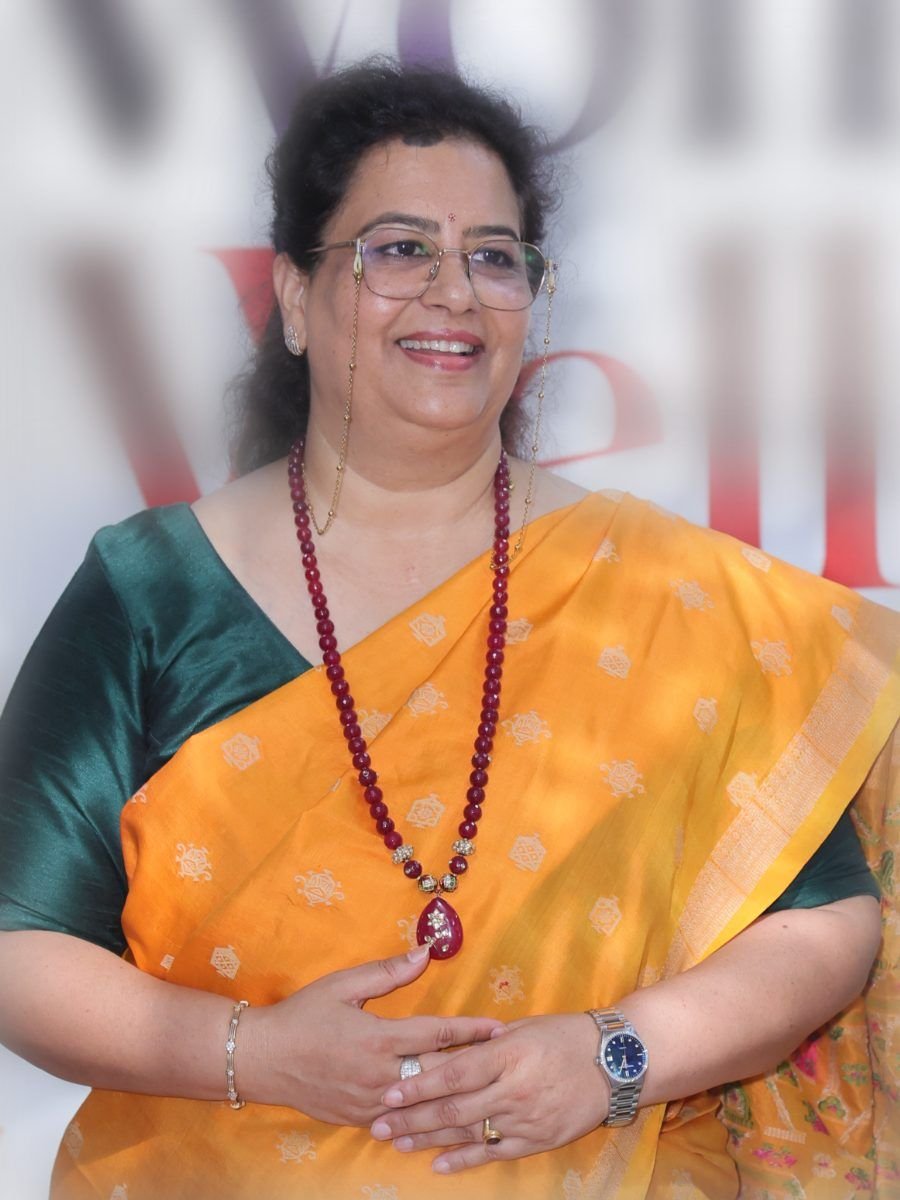
Anjali S. Jain at a Women Wellness Workshop
Anjali S. JainFounder · Educationist

The founder

“I kept meeting women who had been handed a prescription and no explanation. What they were missing wasn’t information. It was a rhythm.”

Anjali S. Jain built Ancient Rhythms, Modern Women out of a decade of sitting with women in their forties, fifties and sixties — first in living rooms, then in temple halls. She still teaches every session herself.

Tradition, then trials

What the evidence actually says

Sleep Well supported

The fixed sleep time does more than the early wake time

Of everything in dinacharya, the single instruction with the strongest modern backing is the least romantic one: sleep and get up at the same hour every day, including Sunday.

In the texts

Dinacharya sets waking in the last watch of the night and treats the hour of rising as the anchor of the whole day, not a matter of preference.

In the trials

Regularity of sleep timing is consistently associated with better sleep quality and mood in midlife women; consistency shows up as more important than duration alone in much of the current work.

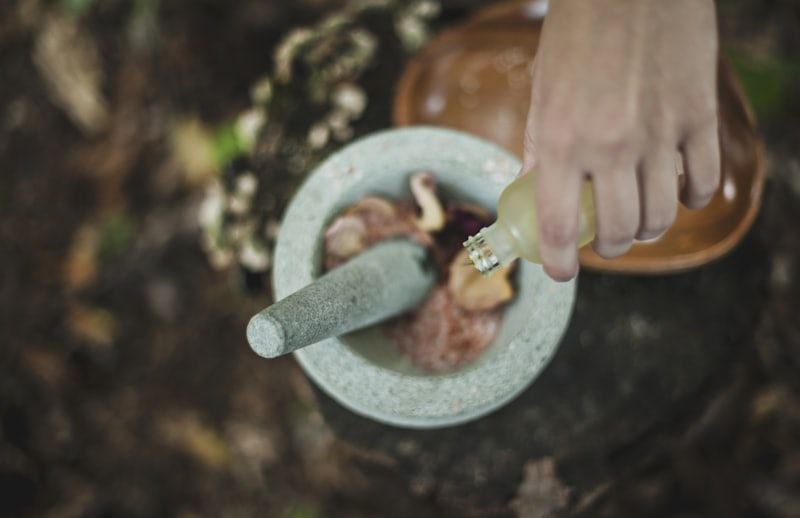
Mood Promising, early

Slow breathing and the heat that arrives without warning

Paced breathing is the practice women adopt fastest, because it can be done in a meeting without anyone noticing.

In the texts

Pranayama is taught as the bridge between body and attention — lengthen the exhale, and the mind follows the breath rather than the other way round.

In the trials

Trials of slow, paced breathing for vasomotor symptoms are small and mixed. Effects on distress and sleep look more reliable than effects on the number of flushes.

Bones Well supported

Weight through the bone is what the bone responds to

The asana sequence we teach for midlife is deliberately weight-bearing, and deliberately unglamorous.

In the texts

Classical asana is prescribed as daily discipline for strength and steadiness, not as performance — the same handful of postures, held, for years.

In the trials

Loading and resistance work are the best-established non-pharmacological levers on bone density and fall risk after menopause. This is one place where tradition and trials agree without qualification.

All the briefs →

The programme

Where she’s teaching next

  • 14 Sep
    Sunday · 10am
    Women Wellness Workshop
    Shri Parshvanath Digambar Jain Mandir, Paschim Vihar · with Paras Mahila Manch
    Book a place
  • 21 Sep
    Sunday · 4pm
    Ancient Rhythms — session one of six
    Community hall, Rohini · limited to 40 women
    Enrol
  • 05 Oct
    Saturday · 11am
    Abhyanga & rest — hands-on
    Living-room circle, Janakpuri · bring your own oil
    Book a place
  • 19 Oct
    Sunday · 10am
    Workshop for a workplace
    By invitation · request one for your office
    Request a date

The programme

Ten practices, one rhythm

Dinacharya, ritucharya, asana, pranayama, food, oil, fasting, japa, rest and satsang — taught in the order a beginner can actually hold.

See the ten →

The evidence

Honest about what is known

Every practice carries two lines: what the classical texts say, and what modern research can and cannot confirm. We do not blur them.

Read the briefs →

The circle

Taught in halls, not clinics

Temple halls, mahila manch meetings, reading clubs. Fifty women at a time, with the tea afterwards counted as part of the session.

Find a circle →

Bring it to your community

A hall, fifty chairs and two hours is all the workshop needs.

Temples, women’s committees, resident welfare associations, reading clubs, workplaces, schools, universities. We bring the teaching and the handouts; you bring the women and the room. Delhi-NCR and increasingly beyond; fees on request.